|
Which lane to use at roundabouts.
UK Roundabouts driving lesson.
Quick reference for learner drivers:
- Turning left (1st exit): Stay left, signal left on approach, keep signal on through the junction
- Going ahead (2nd exit): Stay left unless signs or markings say otherwise, no signal on approach, signal left as you pass the 1st exit
- Turning right (3rd exit+): Signal right, move into right lane, signal left as you pass the exit before yours
- Always give way to the right - to any vehicle already on the roundabout
- MSM every time: Mirror → Signal → Manoeuvre to exit every roundabout
Love them or hate them, roundabouts are everywhere and understanding them is essential if you want to pass your driving test and become a safe, confident driver. This step-by-step guide for learner drivers will show you which lane to use for turning left, turning right, and going ahead. We'll also help you stop hesitating and take safe gaps with confidence.
A crucial part of roundabouts is being prepared as you approach them and knowing where you're going and which lane you'll need.
Roundabouts come in a variety of sizes, sometimes with multiple exits, lanes and traffic lights.
How to approach a roundabout.
Firstly, make sure that you get into position early (as explained below). Approach the roundabout carefully and make use of the MSM routine (mirror, signal, manoeuvre). Look early to your right and ahead, giving way to your right.
Keep a look out for vulnerable road users including cyclists, motorcyclists and horse riders. Pedestrian crossings can also be found near the entrances or exits of a roundabout.
Hesitation at roundabouts - a common problem for learner drivers.
If the roundabout is clear then make sure you go and don't hesitate. Try to anticipate where other drivers are going that are already on the roundabout. Watch the other vehicles' position, speed and angle. If you notice them leaving the roundabout to the exit where you're coming from, there might be an opportunity for you to join. Don't rely on other drivers to indicate as they often don't, or they signal incorrectly.
See below for our video on when to go onto a roundabout. This video is vital if you find yourself hesitating. We'll talk you through how to anticipate other drivers so you'll take every safe opportunity to go.
If you want to know how to move off quickly at a busy roundabout, look here.
|

|
Rough guide video on how to do roundabouts
Subscribe for more tips on our YouTube channel
|
|
|
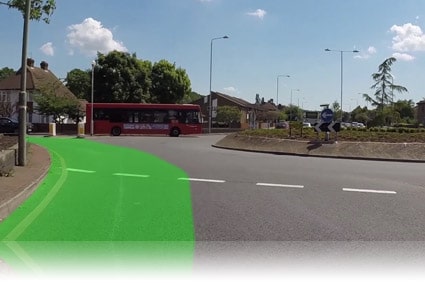
Turn left, first exit.
On approach to the roundabout:
1. Check your mirrors.
2. Keep left. This is very important as you might have another vehicle in the lane next to you on your right.
3. Signal left.
4. Approach carefully, looking to your right and ahead. Give way to the right.
5. Once you have an opportunity to your right, go and keep left.
6. Keep your signal on to inform other road users that you're leaving the roundabout.
|
Turning left, 2nd exit.
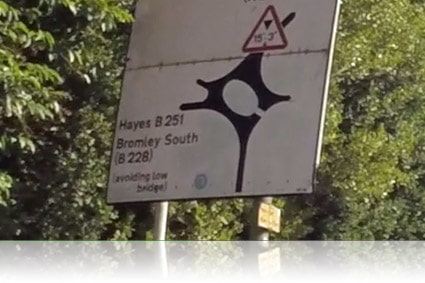
Turning left at a roundabout doesn't always mean that it will be the first exit.
You can see on this sign that the 2nd exit is pointing to the left.
Make sure that you don't signal on approach to the roundabout, but only signal to exit. Signalling on approach would mislead other road users as they might think that you're going to come off to the 1st exit.
|
|
Follow the road ahead, second exit.
Some people wrongly describe this as going straight on at a roundabout. Going 'straight' is something you don't want to do at a roundabout!
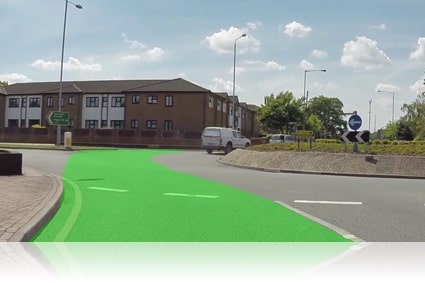
When approaching, look out for any road markings or signs that might tell you which lane to use.
1. If there are no markings or signs telling you any different then keep in the left lane.
2. Check your mirrors, approach carefully, looking to your right and ahead. Give way to the right as usual.
3. Once you have an opportunity to your right, go and keep in the left hand lane (keep in the left lane as a vehicle might be in the lane next to you). Once you're on the roundabout look out for vehicles approaching as they sometimes stop too late and you might need to adjust your position (if it's safe).
4. Check your mirrors (especially the left-hand one) and signal left after you've passed the exit before the one you want. Indicating left informs others that you are exiting.
Many learner drivers fail their driving test for not keeping in lane at a roundabout. Make sure that you don't make this common mistake.
|
|
|
Following the road ahead at a multi-lane roundabout.
On approach to the roundabout:
1. Check your mirrors.
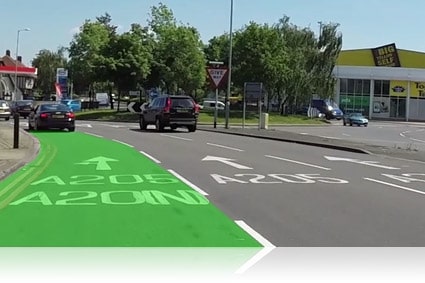
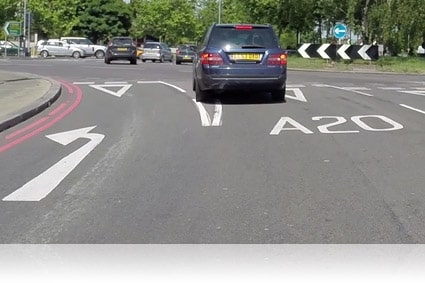
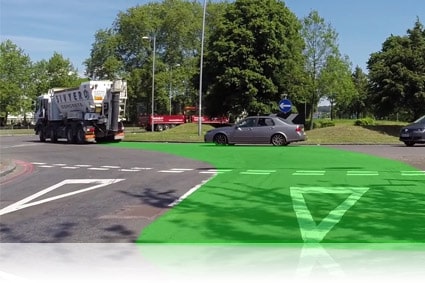
2. Keep in the left-hand lane, unless signs or markings tell you otherwise. On our example roundabout (top picture) the middle lane would be used for overtaking if there is congestion. The road markings might indicate that the left-hand lane is for turning left only (lower picture).
3. Road markings can also show road names, numbers and town names to help you choose the correct lane.
|

|
Turn right, third exit.
On approach look out for any road markings or signs that might tell you which lane to move into.
1. If there are no road markings then check mirrors, signal right and move into the right hand lane.
2. Approach carefully, looking to your right and ahead. Give way to the right as usual.
3. Once you have an opportunity to your right, go and keep right (there may be a vehicle in the lane next to you, so keep to the right).
4. Check your mirrors (especially the left-hand one) and signal left after you've passed the exit before the one you want. Indicating left informs others that you are exiting.
5. Move to the left and exit.
Note: Turning right doesn't always mean it will be the 3rd exit or more. On this sign you can see that going towards Shirley is to the right but it's the 2nd exit. Here you would still need the right-hand lane and signal right on approach.
|
Multi-lane traffic light controlled roundabouts.
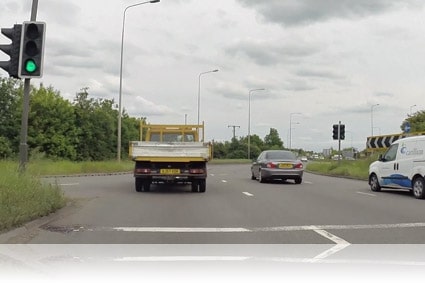
Traffic light controlled roundabouts are a lot safer as they control the flow of traffic and there is no need to give way to the right. It is still well worth checking to the right when you have a green traffic light as other drivers sometimes go through red lights when they shouldn't. Emergency vehicles also go through red lights so be careful.
Sometimes the roundabout will have a combination of traffic lights and give-way lines. If you have give-way lines then give way to the right as normal.
Look out for signs and road markings when there are multiple lanes as they will help you choose the correct lane.
|
|
Which lane to choose on roundabouts (for beginners or a refresh)

|
 |
|
Roundabout FAQs for Learner Drivers
Which lane do I use when going straight on at a roundabout?
Stay in the left lane unless signs or road markings indicate otherwise. Do not signal on approach. Signal left only after you have passed the exit before yours - this tells other road users you are about to leave.
Do I signal left when approaching a roundabout to turn left?
Only signal left on approach if you are taking the first exit. If the left turn is the second exit, do not signal on approach - doing so would mislead other drivers into thinking you're leaving at exit one. Signal left only as you prepare to exit.
When should I give way at a roundabout?
Give way to any traffic already on the roundabout coming from your right. Only proceed when there is a safe gap. If the roundabout is clear when you arrive, do not hesitate - go promptly and confidently.
Which lane do I use to turn right at a roundabout?
Signal right on approach and move into the right-hand lane (unless markings say otherwise). Stay in the right lane while on the roundabout, then signal left as you pass the exit before yours and move left to exit safely.
Can I fail my driving test for the wrong lane at a roundabout?
Yes. Taking the wrong lane or failing to maintain your lane on a roundabout is one of the most common serious (major) faults on the UK driving test. Always read road markings well in advance and commit to your lane before you arrive.
What should I do if I miss my exit on a roundabout?
Stay calm - simply continue around the roundabout and take your exit on the next pass. Never stop, reverse, or swerve suddenly. Keeping calm and continuing safely will not result in a test failure; driving dangerously will.
What is the MSM routine at a roundabout?
MSM stands for Mirror, Signal, Manoeuvre. At a roundabout: check your mirrors early, signal if required for your chosen exit, reduce speed gradually, select a lower gear for better control, then look right and join when safe.

|

|

|
| Finding a good driving school is difficult, find out here why you've just discovered one of the best ones... (click) |
Refresher driving lessons are getting more and more popular, find out more about it here... (click) |
Intensive lessons for people wanting to learn to drive quickly. Click here to find out if you're up for it... (click) |
|
|