 |
When to change gear in a car & how for beginners.
Knowing how to change gear and when is something you'll cover within your first few driving lessons.
Learn the theory behind it now so that your driving instructor doesn't have to tell you every little detail. This way you'll do more driving on your lesson and less talking.
|
|
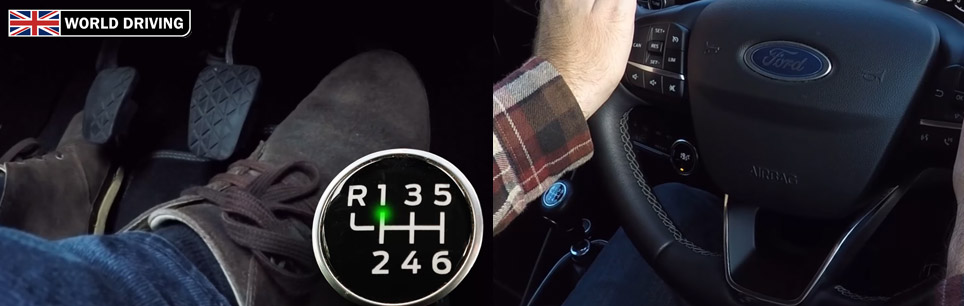
When to change gear in a car & how for beginners video
Subscribe for more tips on our YouTube channel
|
Selecting the correct gear.
The gear you select must be appropriate for your speed and the road conditions. As a general guide on a level road:
1st gear is used to move off from stationary and for speeds below approximately 10mph. It provides maximum pulling power but minimum speed.
2nd gear is used between approximately 10 and 20mph. It is also used when greater engine braking or control is needed at low speed - in slow-moving traffic, for example.
3rd gear is used between approximately 20 and 30mph. It is particularly useful when approaching junctions or roundabouts where you may need to slow or accelerate quickly.
4th gear is suitable from approximately 30mph upwards on roads with a 30mph speed limit once you have built up to the correct speed.
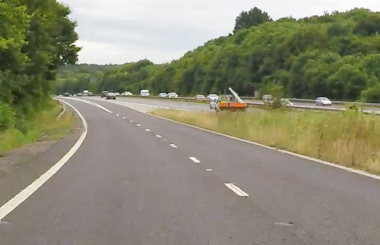
5th and 6th gear are used on faster roads, dual carriageways and motorways once a safe and appropriate speed has been reached.
These figures will vary depending on the vehicle, road gradient, load and traffic conditions. With experience, selecting the correct gear will become instinctive.
|
 |
 |
Changing up to a higher gear.
Change up to a higher gear as your speed increases. If you stay in a low gear beyond the appropriate speed, the engine will over-rev, use more fuel and create unnecessary noise.
Use the sound of the engine as your guide. When the engine note rises and sounds as though it is working hard, select the next higher gear. You can also use the rev counter - aim to change up before the needle reaches 2,500rpm on a petrol engine or around 2,000rpm on a diesel.
Do not change up too early. Selecting a higher gear before sufficient speed has been reached will cause the engine to labour and the car to feel unresponsive. In severe cases the engine may stall.
|
Changing down to a lower gear.
Select a lower gear when your speed reduces or when more power is needed from the engine. As a general guide, change down to 2nd gear when your speed falls below approximately 20mph and to 1st below approximately 10mph.
If you remain in too high a gear as your speed drops, the engine will begin to shudder - known as labouring - and may stall. Change down before this occurs.
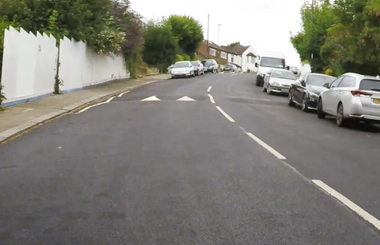
You may also need to change to a lower gear when driving uphill. If the engine begins to struggle or you hear a low, laboured sound, select the next gear down to restore pulling power.
Block changing - selecting a gear that is more than one step lower - is acceptable and often more efficient. For example, if you are slowing from 40mph to a near stop at a junction, you may change from 4th directly to 1st rather than working through each intermediate gear. Always ensure your speed matches the gear you are selecting.
|
 |
 |
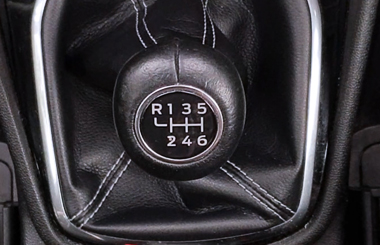
Familiarise yourself with the gear positions.
Before driving, make sure you know the position of each gear. Practise moving the gear lever through all positions with the engine off and the car stationary. You should be able to select any gear without looking down at the gear lever.
Glancing down at the gear lever while driving means your eyes are off the road. A competent driver selects gears by feel, keeping their attention on the road ahead at all times.
Co-ordinating the controls.
Smooth gear changing requires co-ordination of the accelerator, clutch and gear lever. Press the clutch pedal fully down before selecting the new gear, then raise it smoothly and progressively. Release the accelerator as you press the clutch and reapply it as you bring the clutch up. Harsh or hurried movements will result in a jerky, uncomfortable change.
|
 |
 |
 |
| Finding a good driving school is difficult, find out here why you've just discovered one of the best ones... (click) |
Refresher driving lessons are getting more and more popular, find out more about it here... (click) |
Intensive lessons for people wanting to learn to drive quick. Click here to find out if you're up for it... (click) |
|
|
|